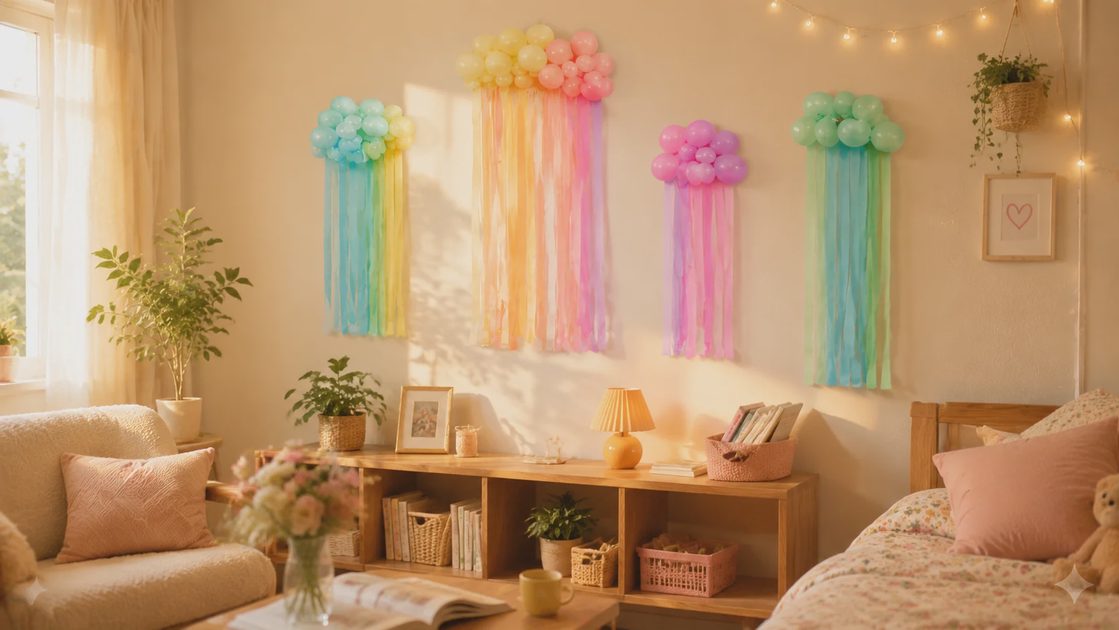
It's 9pm the night before your roommate's birthday, and you're staring at a bare apartment wall wondering how anyone decorates for a party when the lease says no nails, no tape residue, and definitely no "creative" wall modifications. This is the exact moment where crepe paper streamers earn their place in a renter's toolkit — they turn a plain rented room into a party without leaving a single mark behind, which is really the whole philosophy behind decorating a place you don't own.
Why Crepe Paper Streamers Are the Ultimate Renter-Friendly Party Decor
Most party decor assumes you can drill, nail, or staple things into place. Renters don't have that luxury, which is exactly why party streamers earn their spot in the toolkit — they work with whatever's already there instead of asking you to alter it.
Four Ways to Hang Without a Single Tool
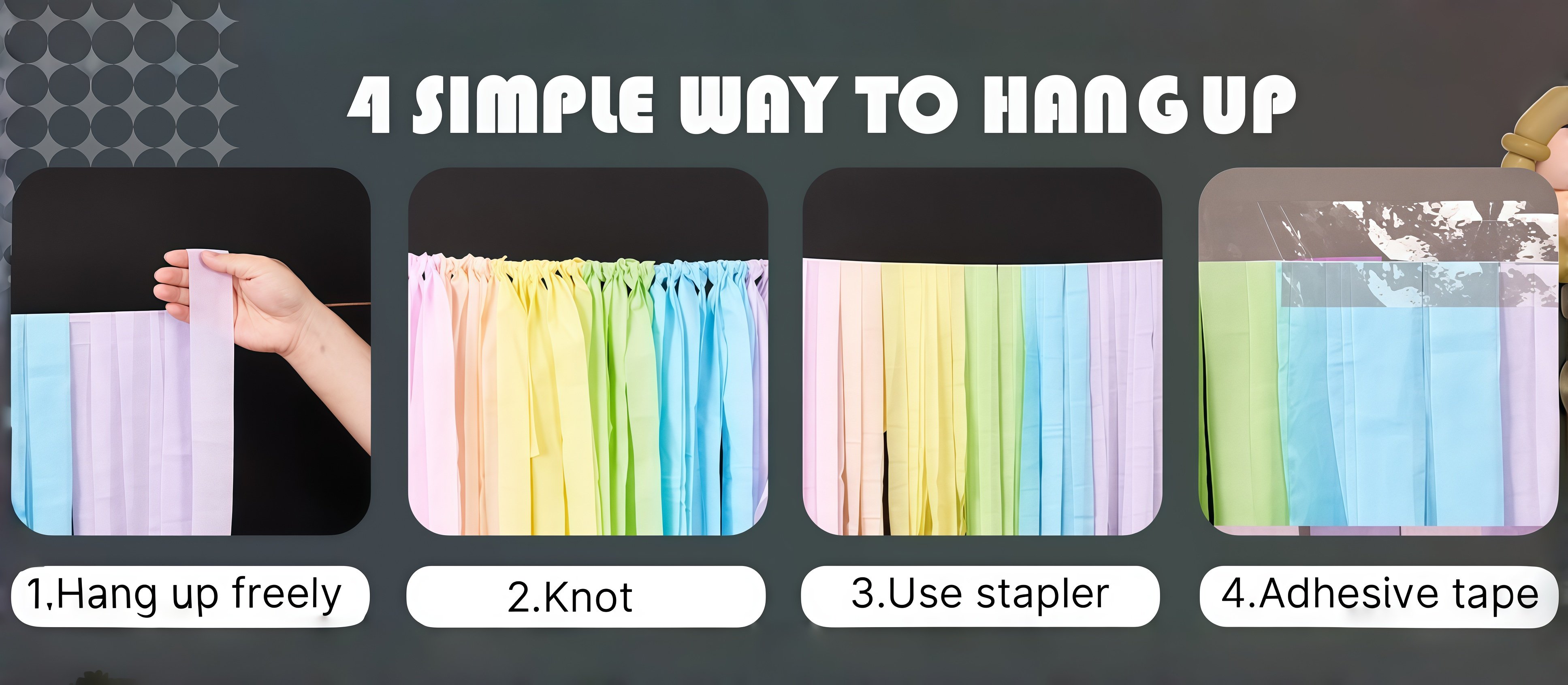
What makes streamers so adaptable is that there isn't just one way to put them up. You can let a length hang freely from a curtain rod or shelf edge for a loose, draped look. You can knot two ends together around a doorknob or banister post — no hardware required at all. A small handheld stapler works if you're pinning fabric-backed decor like a fireplace mantel scarf, where the staple goes into the fabric rather than the wall. And for anything smooth — glass, tile, painted trim — a strip of removable adhesive tape holds a streamer end in place without stripping paint on removal. Having four options on hand means you're never stuck improvising with regular tape that pulls the wall finish off with it.
Command Hooks Fill In Where You Need More Hold
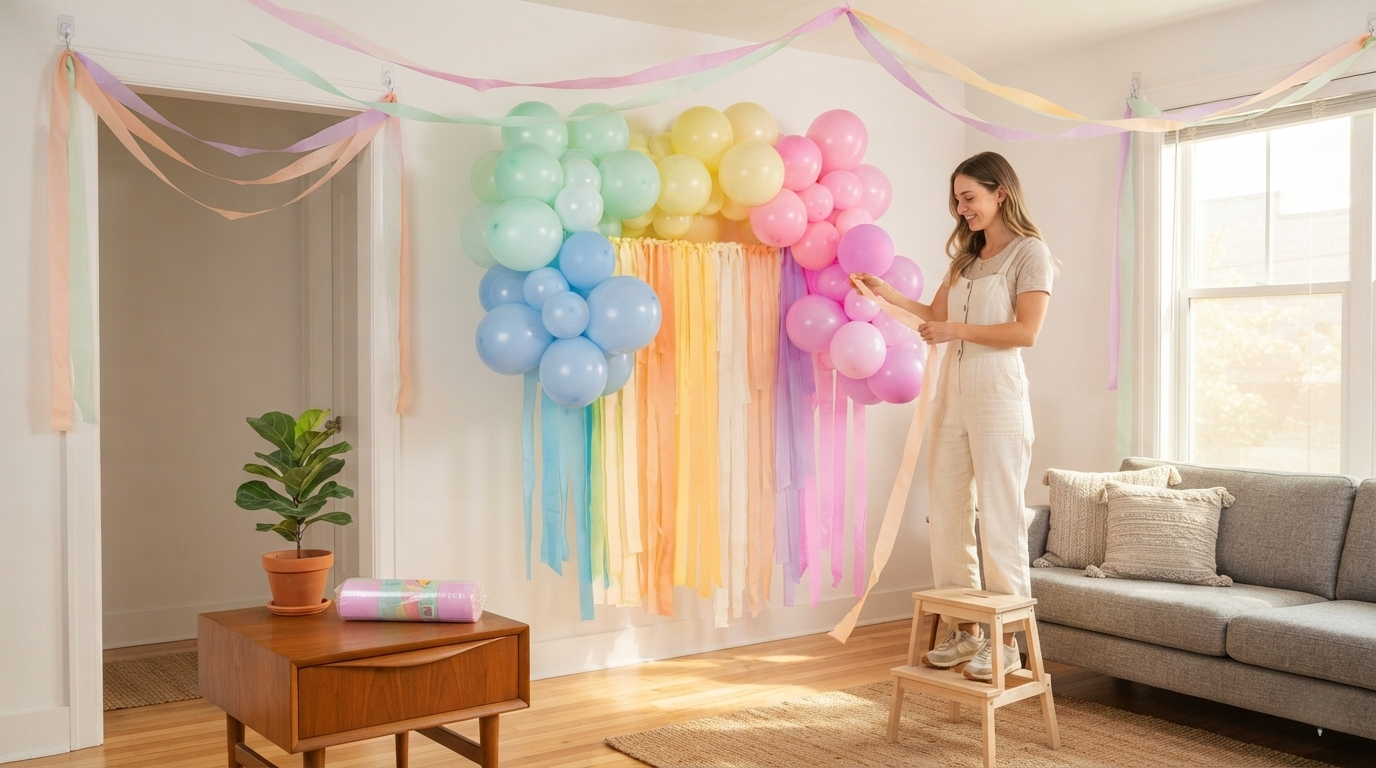
For spans that need a little more support than a knot or a strip of tape — a full ceiling swag, for instance — a few well-placed command hook hacks give you anchor points that hold real weight and come off clean. Loop the streamer end around the hook, pull it taut to the next point, and repeat. Because the roll itself is lightweight, even a small hook can carry a long stretch of paper.
Four Spots in a Rental That Instantly Transform
Rather than trying to decorate every wall, it helps to think in terms of specific spots — the same four areas that tend to do the most visual work in a small apartment.
Door and Window Frames
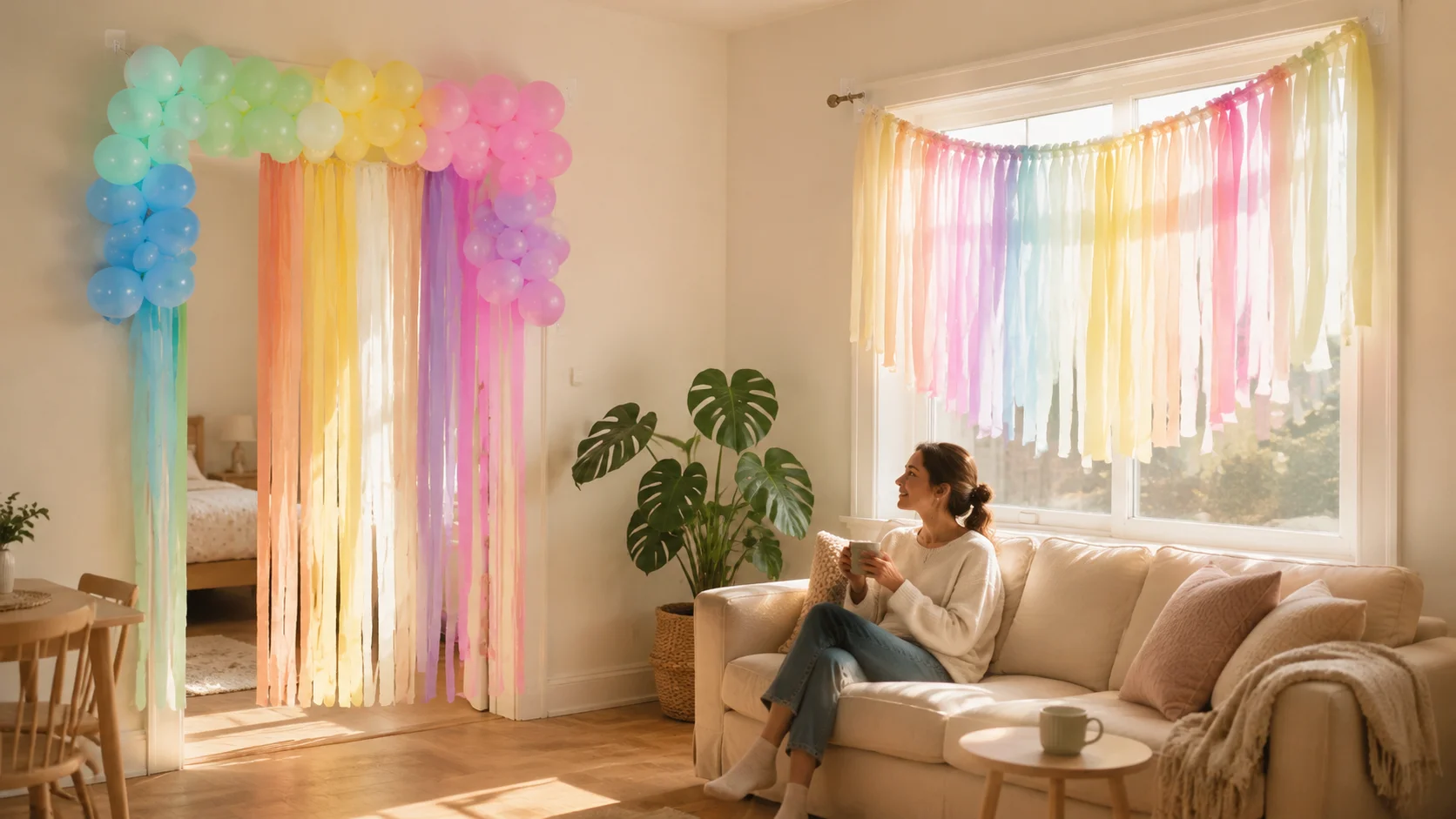
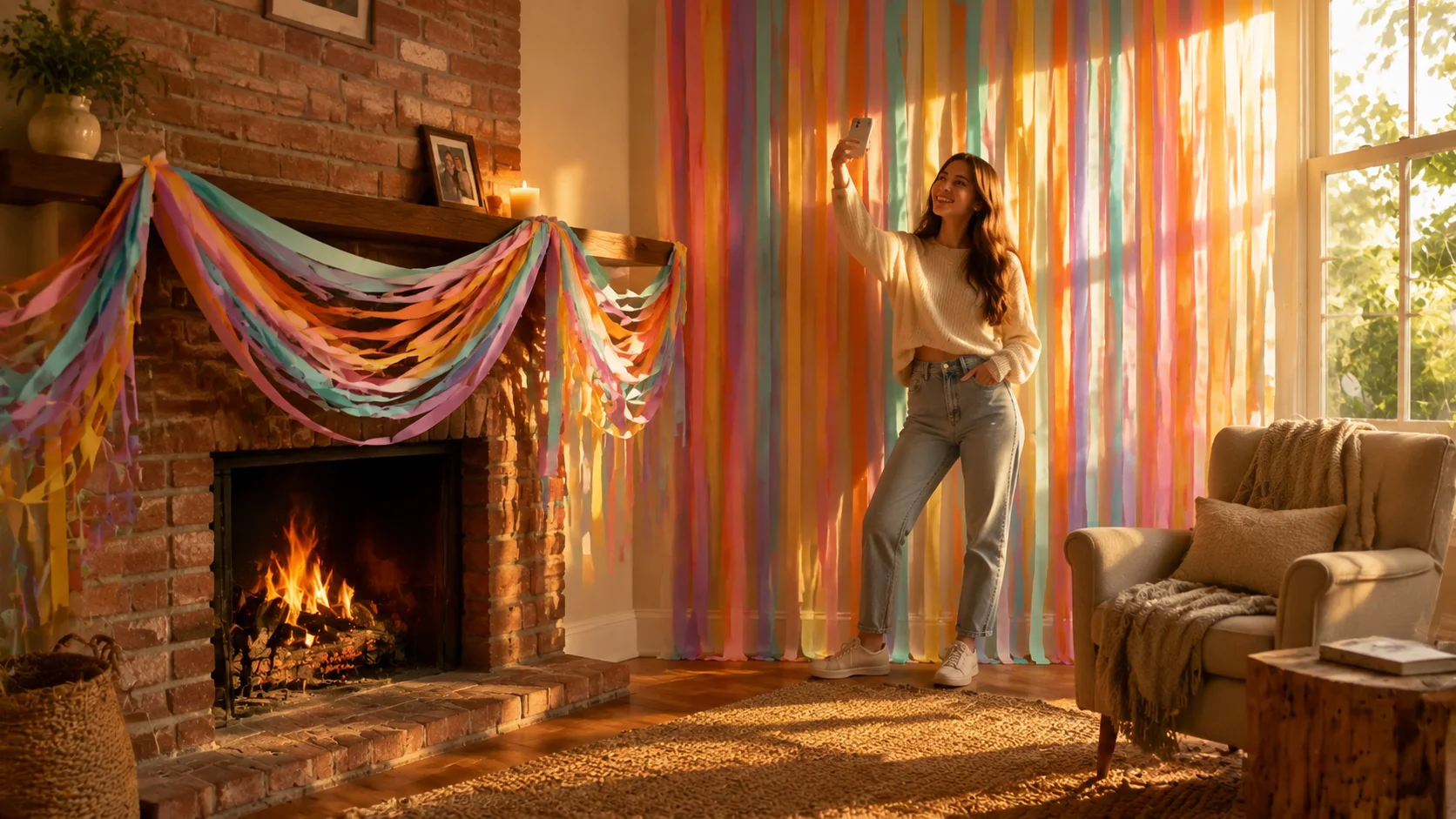
A doorway framed in pastel streamers turns a plain entrance into a photo-worthy threshold the moment guests walk in — hang several lengths from the top of the frame and let them fall freely on either side. A window works the same way: drape a run of color across the rod so it catches light from outside, which gives the pastel shades a soft, almost glowing quality that artificial lighting can't quite replicate.
Fireplace Mantels and Feature Walls
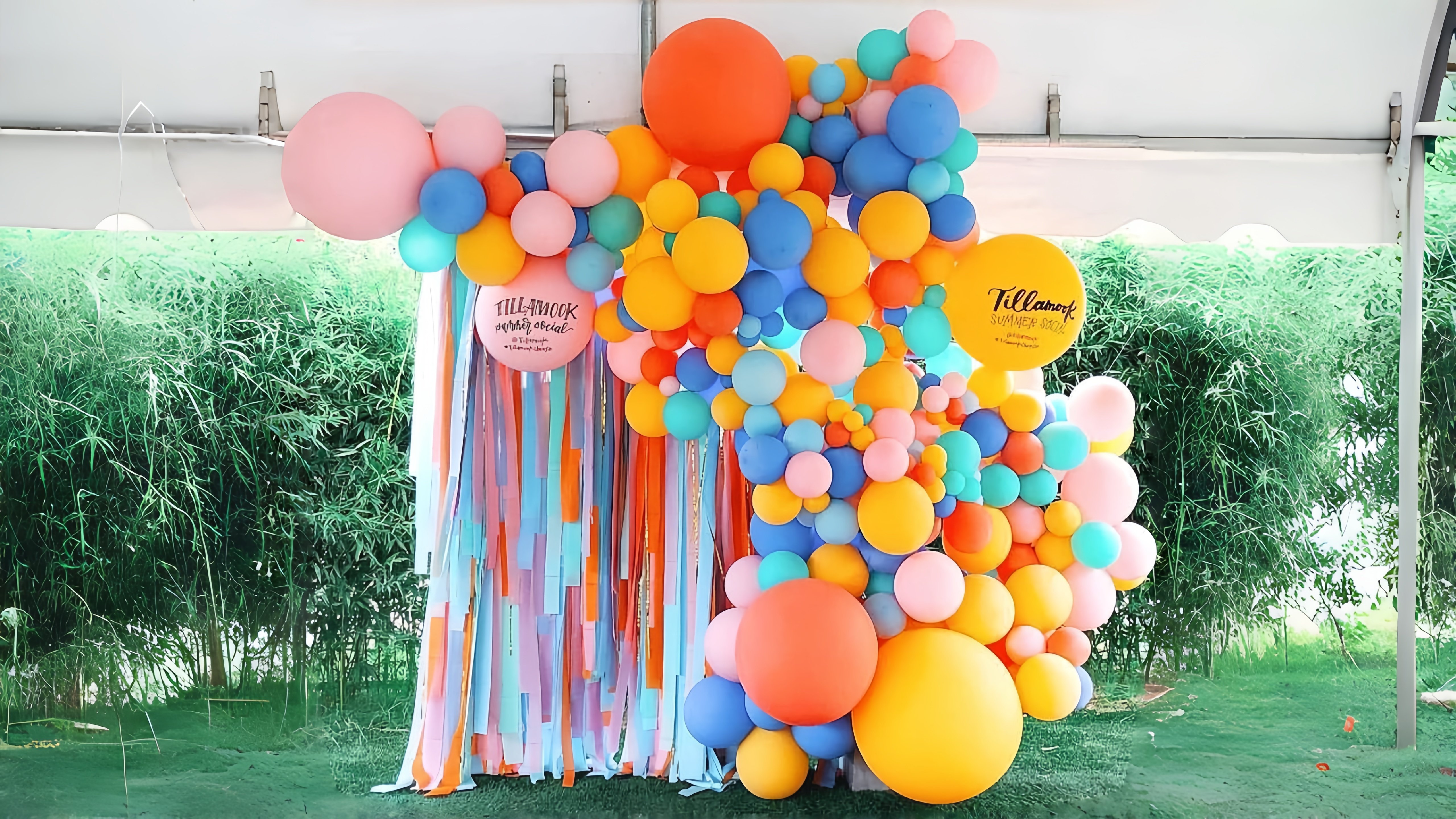
A fireplace mantel, if your rental has one, is an underused focal point — knot or lightly staple streamers along the mantel edge so they hang down over the hearth, layering two or three shades for depth. On a bare feature wall, streamers can run floor-to-ceiling in a dense cluster, turning an ordinary wall into an actual backdrop guests will want to stand in front of rather than just walk past.
A Quick DIY Detour: Turning Rolls Into Tassels and Toppers
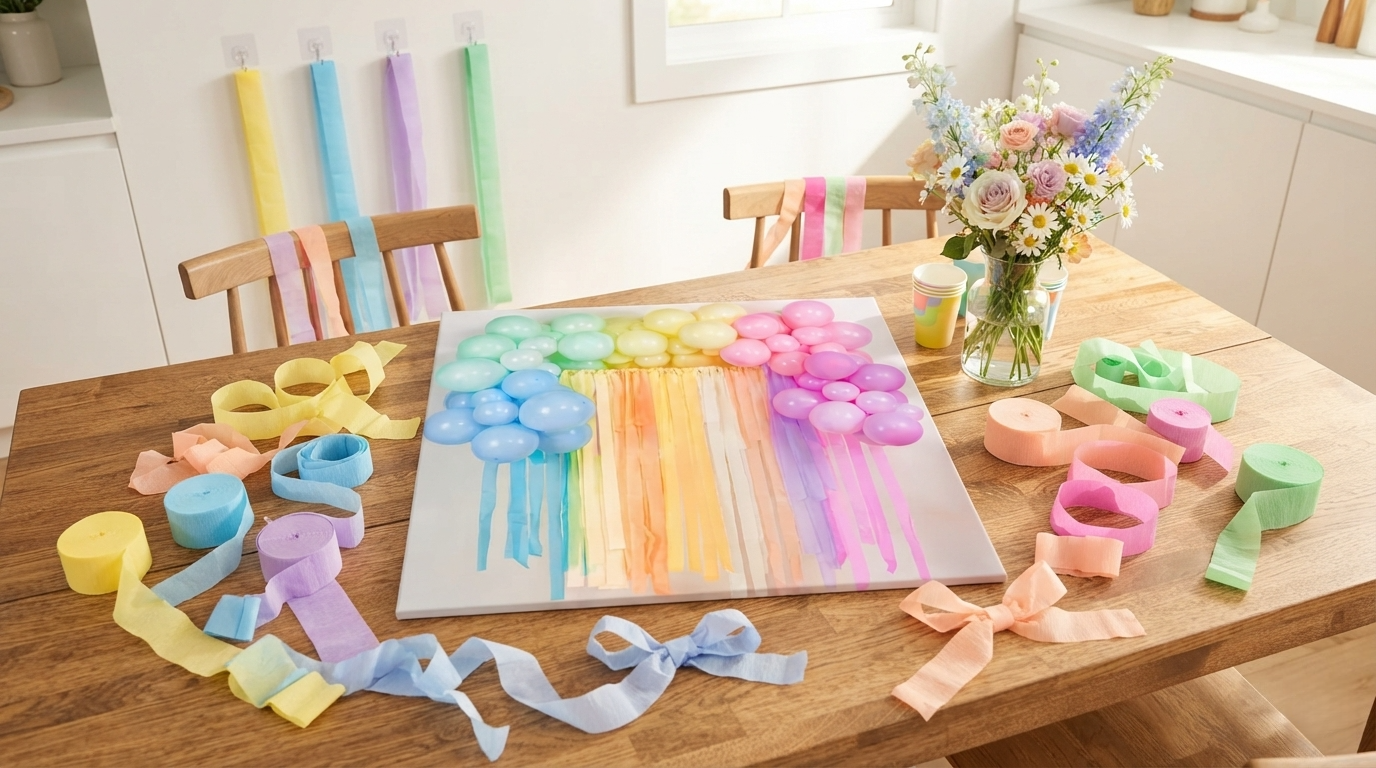
Beyond hanging streamers as-is, the same crepe paper roll doubles as raw material for small DIY touches. Snip a short length, fold it in half, and cut fringe along the open edge to make a simple tassel — twist the base a few times and it holds its shape well enough to tie onto a straw for an instant cupcake topper, or bundle a few tassels together for a mini garland. It's a five-minute project that uses up the ends of a roll you'd otherwise toss, and it stretches one pack of crepe paper streamers across both large-scale hanging decor and these smaller table details.
Material Matters: Why Thickness Changes Everything
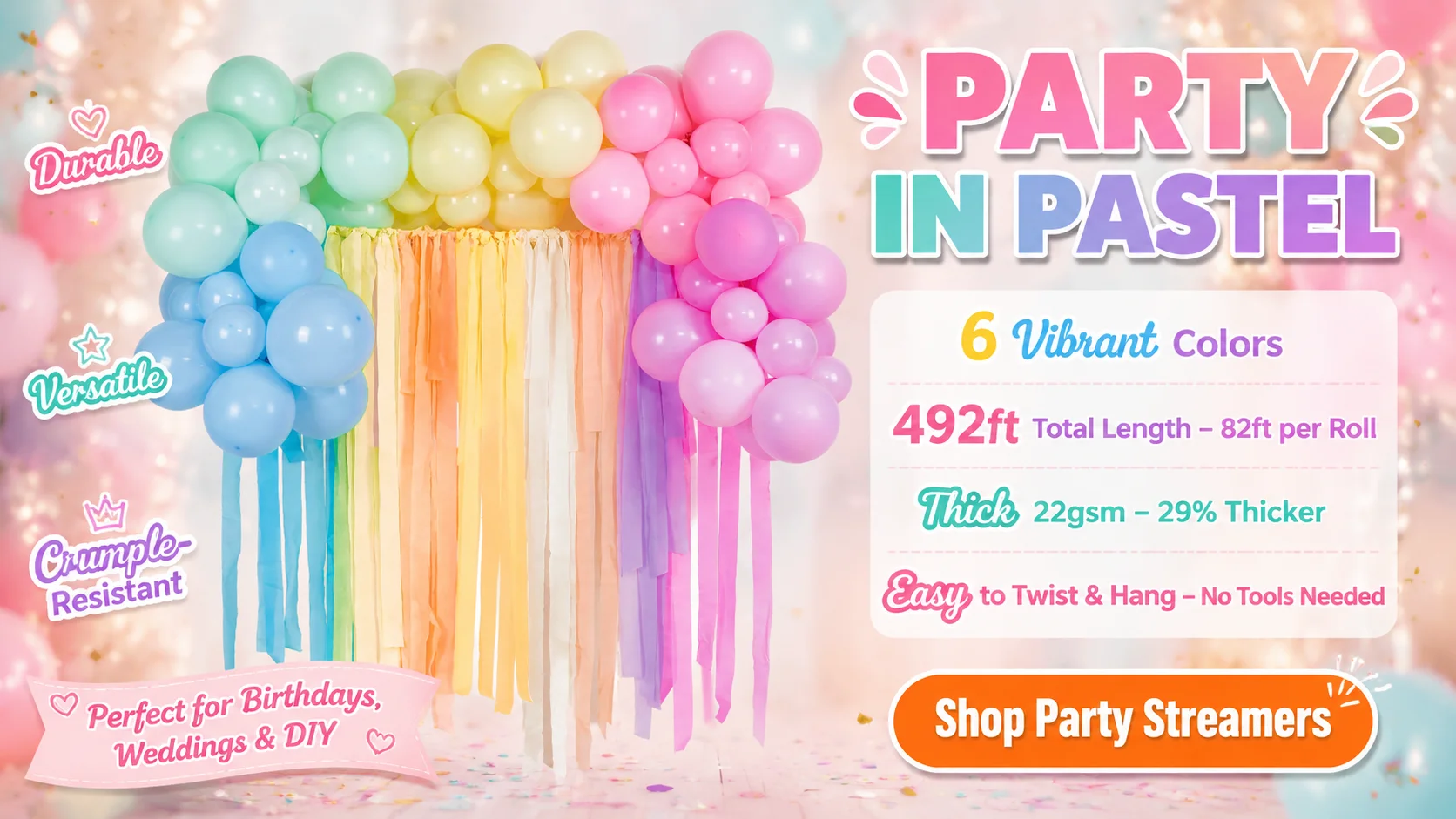
Not all crepe paper behaves the same way once it's taped, twisted, or hung for a few hours. Thinner paper — the standard 17 g/m² most party stores carry — tends to sag, tear at the fold, or go limp in humid rooms. A 22 g/m² paper weight (about 29% thicker than the standard) holds its shape through twisting and stays put through an evening without drooping into the guacamole bowl. That extra body also makes the paper easier to work with when you're twisting birthday streamers into spirals by hand — thinner paper tends to crease unevenly, while a sturdier roll holds a clean, consistent twist. For a renter, that thickness also means less risk of paper snagging on furniture edges or catching on doorframes as guests move through a smaller space — which, let's be honest, describes most rental living rooms.
Styling Ideas for Small Rental Spaces
Different rooms call for different hanging strategies, especially when you're working around fixtures you can't alter.
Space | Hanging Method | Renter-Friendly Tip |
|---|---|---|
Living room ceiling | Adhesive ceiling hooks + streamer swags | Space hooks evenly to avoid heavy sag mid-span |
Doorway or hallway | Twisted spiral, hook on each frame side | Skip the frame itself — hook the adjacent wall trim |
Stair railing | Simple wrap, no adhesive needed | Railings are natural no-damage anchor points |
Window or curtain rod | Drape over an existing no hole curtain rod | Uses hardware you already have installed |
Backdrop wall | Layered spiral over temporary wallpaper | Pin ends with removable clips, not tape directly on paper |
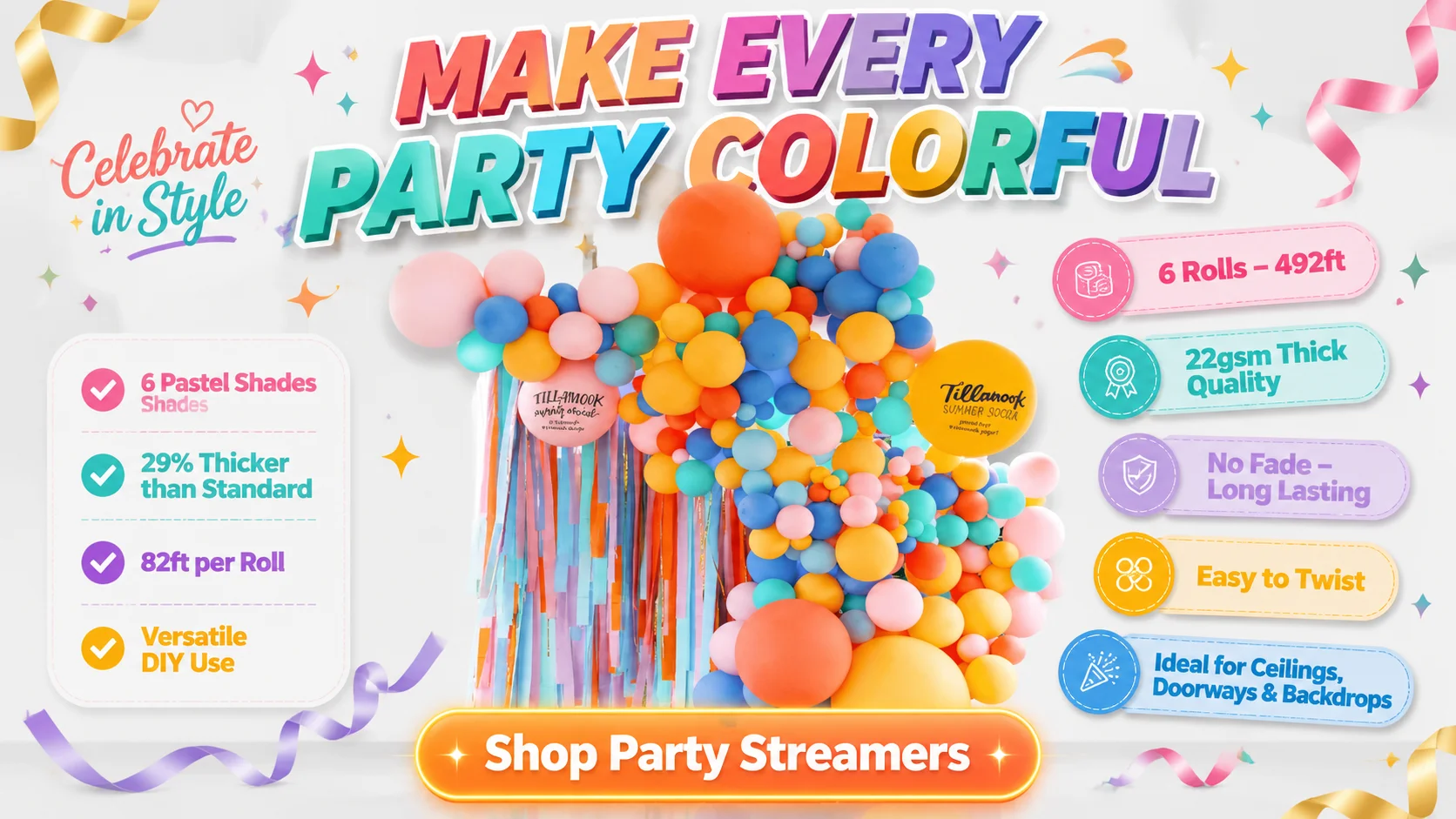
This kind of table is worth sketching out before party day — it saves you from buying extra hooks you don't need or realizing halfway through setup that your ceiling won't hold adhesive in humid weather. It also helps divide up the six rolls of party decorations across rooms so you're not left short in the space that matters most.
Cleanup Day: How to Remove Everything Without a Trace
The real test of any rental decor isn't how it looks going up — it's how it comes down. Because nothing is nailed or taped directly to a wall, teardown is mostly untwisting and unhooking. Adhesive hooks peel away following their own removal instructions, streamers ball up for recycling or storage, and — because the manufacturer notes the paper should be handled gently rather than yanked — a slow, careful pull keeps everything intact enough to reuse for a smaller occasion later. That's a quiet bonus for anyone trying to decorate rental without losing deposit money: leftover crepe paper streamers make a second appearance at a smaller gathering, stretching one purchase across two events instead of one.
Finding Your Own Renter-Friendly Hanging Solutions
Every rental has its own quirks — some ceilings won't hold adhesive well, some landlords are stricter than others about anything touching paint. Part of decorating a rented space is simply testing what your specific walls and fixtures can handle before committing to a full setup. Streamers happen to be forgiving in that sense: if one hook placement doesn't work, you're only adjusting a loop of paper, not patching a hole. That flexibility is really what renter friendly hanging solutions are about — decor that adapts to your space instead of asking your space to accommodate it.
FAQ
Q: Can crepe paper streamers be reused after one event?
A: If handled gently during removal and stored loosely rolled rather than crushed, streamers often survive one or two additional light uses, though the texture softens slightly each time.
Q: Will crepe paper color transfer or bleed onto walls in humid rooms?
A: Crepe paper can bleed slightly if it gets wet, so it's best kept away from direct contact with painted walls in humid conditions and dried immediately if splashed.
Q: How many rolls do I need for an average apartment living room?
A: For a standard-sized rental living room, two to three rolls typically cover a ceiling swag plus one doorway or backdrop accent, leaving extra for spirals or table styling.
Q: Is crepe paper safe to use near curtain rods or blinds?
A: Yes, as long as it's draped rather than wrapped tightly around moving mechanisms, it won't interfere with curtain or blind operation.
Q: What's the best way to store leftover rolls between parties?
A: Keep unused portions loosely rolled in their original packaging or a paper bag, away from direct sunlight and moisture, to preserve color and texture.
No letters yet — be the first guest to write.