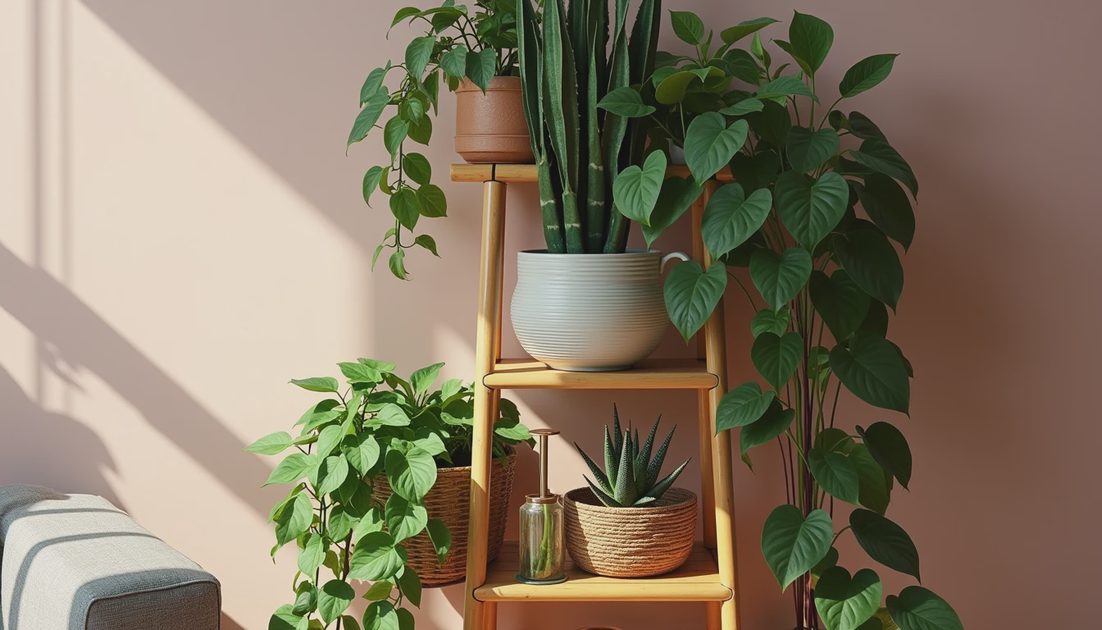
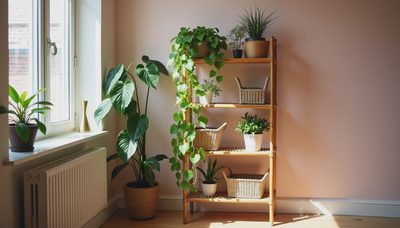
My plant shelf has a secret. Behind the trailing pothos and the perfectly tilted snake plant, there's a water stain on the wall from a radiator leak I can't fix. Under the jade plant, a scuff mark from the previous tenant's furniture. Next to the ZZ, a patch of paint that's a slightly different beige than the rest — the landlord's "touch-up" that never blended. None of this is visible in photos I post, not because I crop it out, but because I've learned how to style a plant shelf so the plants do the work of hiding what I can't change. Here's the formula: heights, textures, and strategic imperfection management.
Height Layering: The "Tall Thing" Rule Is Only the Beginning
You know the basic rule: tallest plant in the back, shortest in the front. That's fine for a single row, but a real shelf has depth. I use three height zones on my five-tier bamboo shelf. Zone one — the back row — holds my tallest plants: a 24-inch snake plant and a ZZ with glossy upward stalks. Zone two — the middle layer — has mid-height plants like my jade and a compact aloe. Zone three — the front edge — is where the trailers live: Kevin the pothos cascading down, a string of hearts I'm trying not to kill. This creates a plant shelf styling effect where your eye moves up and down, not just side to side. You're not building a police lineup. You're building a landscape in miniature.
I also cheat height. Short plants sit on thrifted books, a small wooden block, or an upside-down terracotta saucer. The pot itself stays the same size, but the plant rises three inches and suddenly feels like it belongs in the composition. This is indoor plant shelf decor on a rental timeline: zero commitment, maximum flexibility.
Texture Over Collection
A shelf full of identical terra cotta pots is boring. I mix materials deliberately: a ribbed ceramic mug as a cachepot for my pothos cuttings, a woven basket from Goodwill holding my snake plant, a clear glass jar with water-rooted monstera stems, a matte white planter for the ZZ. The goal isn't to show off how many plants I own. The goal is to make the shelf feel like a curated space, not a nursery flat. This is styling plants without drilling applied to the shelf itself: everything is moveable, nothing is permanent, and if I decide next week that the basket should go somewhere else, it goes.
Non-plant objects are part of the texture equation. I keep a thrifted brass candlestick on the second shelf, a small round mirror leaning against the back panel to bounce light, and a stack of two paperbacks under the aloe. These objects break up the green and give the eye places to rest. That's the rental plant decor philosophy: less greenhouse, more home.
Hiding Imperfections: The Real Reason I Style So Densely
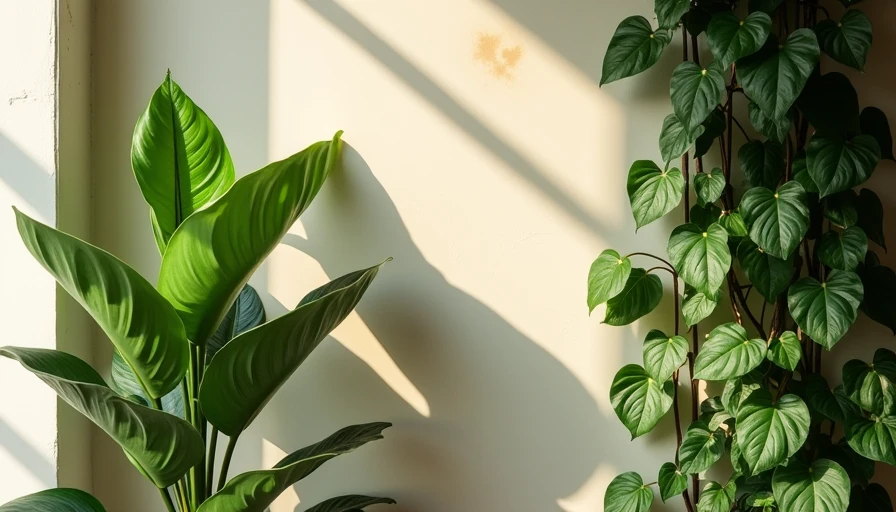
Here's the honest part. The radiator in my current apartment leaked two winters ago, and the wall behind my plant shelf has a faint but permanent water stain. It's about six inches across, yellowish, and located exactly at eye level. I cannot paint it. I cannot scrub it off. I can, however, put a tall ZZ plant in front of it and pretend it doesn't exist.
To the left of the shelf, there's a scuff mark from the previous tenant who apparently dragged furniture across the wall like a chaotic ghost. A trailing pothos, positioned on the top shelf and allowed to vine down the side, covers it completely. This is renter-friendly plant shelf ideas at their most practical: plants aren't just decor. They're camouflage.
The trick is density without clutter. I place plants close enough together that they create a continuous wall of green, but I leave small gaps so the shelf doesn't feel suffocated. A visitor sees abundance. I see strategic patch coverage. Both can be true.
The Rotating Display: Why My Shelf Changes Monthly
I don't style my shelf once and leave it. Every few weeks, I swap something — move the jade down a tier, rotate the snake plant so it leans toward the light differently, cut a pothos vine and put it in water to start a new plant. This keeps the shelf from feeling static, which is important when you rent: the space might be temporary, but the details don't have to be boring. A no-drill plant shelf is never finished. It's a living thing, literally and figuratively.
What I Learned From a Shelf Collapse (Yes, Really)
Last year, I overloaded a single tier with four ceramic pots and a glass vase. The bamboo shelf bowed. Nothing broke, but I learned the hard way that weight distribution matters. Now, heavy pots live on the bottom tier. Lightweight plastic and melamine pots go up high. The top shelf holds one trailing plant and nothing else heavy. This isn't just styling advice — it's deposit-safe decor physics. A collapsed shelf can scuff walls, dent floors, and kill a plant you've kept alive for three years. Spread the weight. Your landlord and your pothos will both thank you.
No letters yet — be the first guest to write.