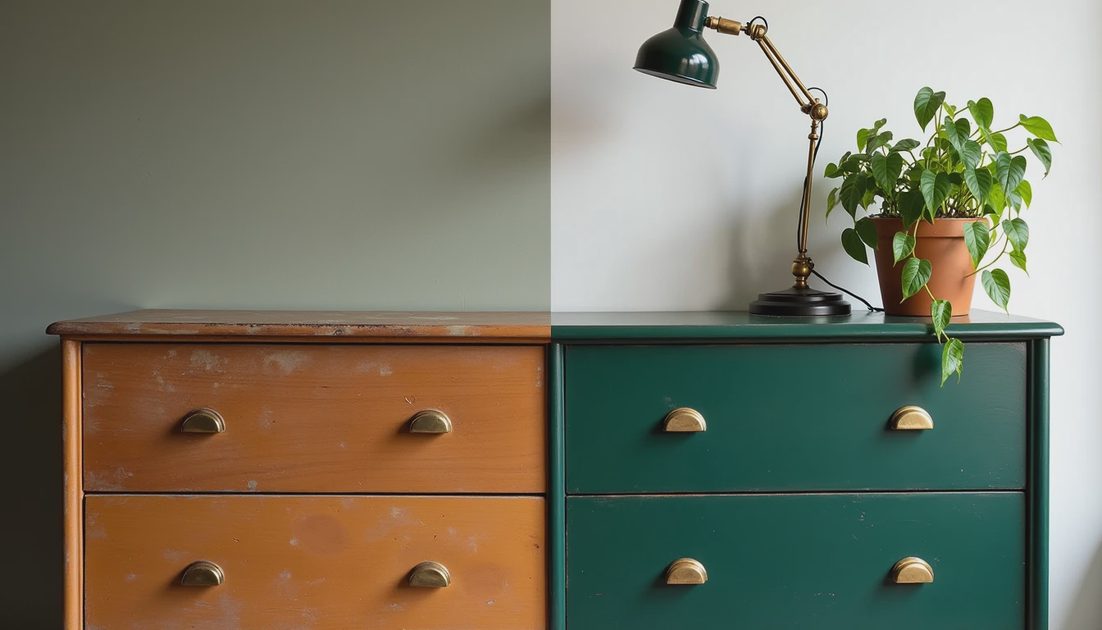
Three months ago, I found a vintage dresser on Facebook Marketplace for $40. It had six drawers, solid wood construction, and a smell I can only describe as "grandma's basement meets wet dog." The listing photos were blurry, the seller was "motivated," and I drove 25 minutes to a suburb I'd never heard of to shove this thing into the back of a borrowed SUV. What followed was an $80 rehab that turned a disgusting dresser into the best piece of furniture I've ever owned. This is the honest story of that thrifted furniture flip — the gross parts, the mistakes, and the math that proved I'd never buy new again.
The Find: What $40 Bought Me
The dresser was a 1960s Bassett piece — dovetailed drawers, solid maple veneer, original brass hardware that was tarnished beyond recognition. It also had: three layers of contact paper inside each drawer (each uglier than the last), a sticky residue on the top that I later identified as old candle wax, and a colony of dead silverfish behind the bottom drawer. I wore gloves for the first hour. But the bones were good. The drawers slid smoothly. The veneer wasn't chipped. For cheap furniture flips, the rule is simple: buy the best structure you can afford and ignore everything cosmetic. This dresser cost less than a dinner for two, and it was built to outlive me.
The Cleanup: The Part Nobody Posts on Instagram
Before I touched a single tool, I spent two hours cleaning. I vacuumed every drawer cavity with a crevice tool. I scrubbed the interior with a 50/50 vinegar-water solution and left the drawers outside in direct sunlight for an afternoon — sunlight is the best deodorizer I've found for vintage furniture. The candle wax came off with a hair dryer and a plastic scraper. The contact paper peeled away in strips that revealed yet more contact paper underneath. This is the furniture flip for apartment reality that doesn't make the before-and-after reel: the first step is always, always gross. If you can't handle dead bugs and mystery smells, stick to IKEA.
The Flip: Sand, Paint, Hardware, Seal
Sanding: I used 120-grit sandpaper and a $15 palm sander I borrowed from a neighbor. The goal wasn't to strip the finish — just to scuff it enough for primer to adhere. Total time: 45 minutes. I wore a mask. My living room smelled like sawdust for a day.
Priming: One coat of Zinsser B-I-N shellac-based primer rolled on with a foam roller. This stuff is the secret weapon of beginner furniture flipping because it blocks old stains and odors. The dresser went from "basement smell" to "nothing smell" in one coat. Cost: $12.
Painting: I used Behr interior latex in a deep forest green — a sample pot was $6 and covered the entire dresser body with two coats. I applied it with a small foam roller for the flat surfaces and a cheap angled brush for the details. The green against the original brass hardware was exactly the look I wanted. This is DIY furniture makeover territory that requires zero artistic skill, just patience between coats.
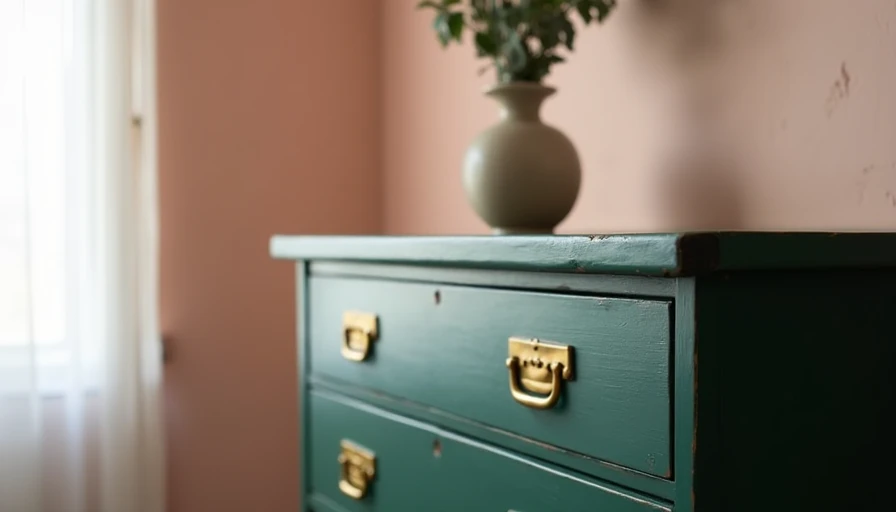
Hardware: This is where I got lucky. The original brass pulls were solid, not plated, which meant they could be revived. I soaked them in a bowl of warm water, dish soap, and white vinegar for an hour, scrubbed them with an old toothbrush, and watched them go from blackened grime to warm, aged brass. Restoration instead of replacement saved me at least $30. This is the thrifted decor on a budget win I'm still proudest of.
Sealing: Two thin coats of water-based polycrylic in matte finish on the top surface only — the part that would see daily abuse from keys, coffee, and my tendency to dump my pockets directly onto it. Cost: $8.
The Math
Dresser: $40
Primer: $12
Paint: $6
Polycrylic: $8
Sandpaper and supplies: $14
Hardware restoration: free (soap and vinegar I already owned)
Total: $80 (plus the $40 dresser, so $120 all in)
A similar-looking solid wood green dresser from a mid-range retailer? I found one for $1,200. The Math spreadsheet got a very long, very smug entry that day. This is why I treat every furniture flip for renters as both a hobby and a financial strategy.
What Went Wrong
I got lazy on the drawer interiors. I painted the front-facing edges but didn't seal the inside, which means my clothes still pick up a faint vintage smell if I leave them in too long. I also misaligned one drawer pull by about an eighth of an inch, and now the middle drawer looks slightly drunk if you stare at it long enough. These are the thrifted furniture flip truths I've learned to live with: perfect is for showrooms. Slightly crooked is for real life.
Why a Dresser Like This Moves With Me
This dresser is heavy — probably 80 pounds — but it breaks down into six removable drawers and a solid frame. I can move it in two trips with one friend, and I already have. It's survived one lease renewal and will survive the next. That's the whole point: a well-flipped piece isn't just decor. It's a renter furniture flip that earns its spot in every U-Haul.
No letters yet — be the first guest to write.