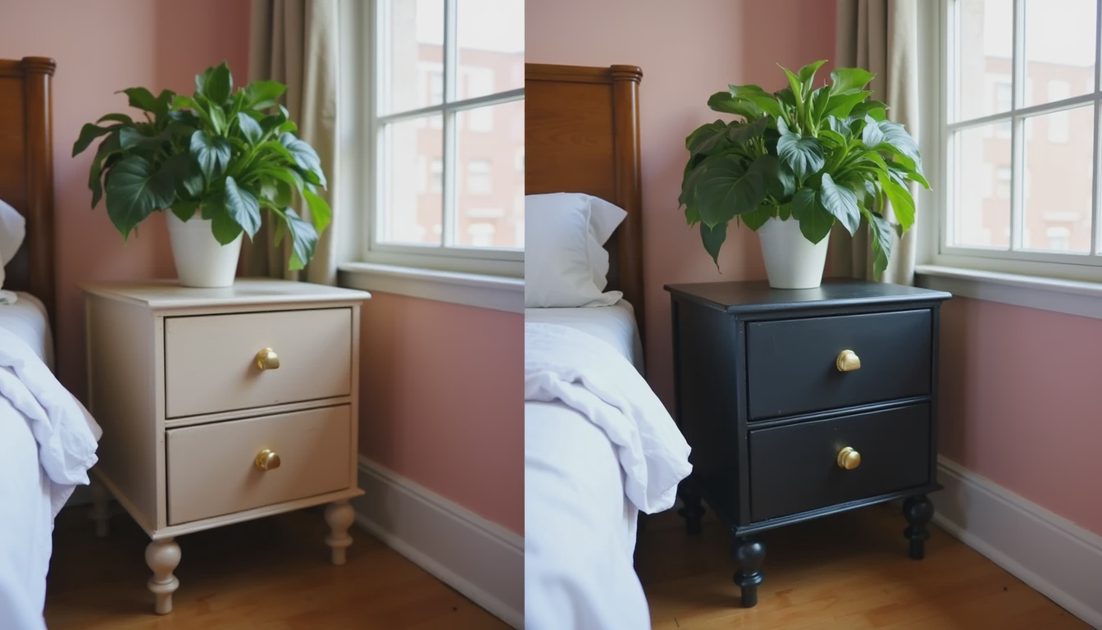
It was a Saturday morning in Soulard, 8:15 a.m., and I was crouched on a damp sidewalk at an estate sale, digging through a box labeled "MISC — MAKE OFFER." That's where I found it: a solid wood nightstand with three crooked drawers, one missing knob, and a finish that can only be described as "cigarette beige." The woman running the sale looked at it like it was garbage. I looked at it like it was my next personality trait. She said, "Two dollars and it's yours." I handed over two singles and hauled it three blocks to my apartment. That thrifted furniture flip became the piece that made everyone — my mom, my landlord, the guy I briefly dated — ask if I'd finally bought a place. I hadn't. I just learned how to make cheap look expensive.
What I Actually Bought for $2
Before I touched a single thing, I catalogued what I was working with. The nightstand was solid pine — heavy, scratched, but structurally sound. The drawers were dovetailed, which told me it was older and better-built than anything I could afford new. The top had water rings and what looked like melted candle wax. The original hardware was brassy and bent. But for $2, I could afford to make mistakes. That's the whole philosophy behind cheap furniture flips: when the stakes are that low, you can experiment without crying.
The Flip: Five Steps, Zero Power Tools
Step 1 — Deep clean and sand. I wiped everything with Krud Kutter degreaser, let it dry, then hand-sanded with 120-grit paper just enough to scuff the old finish. No power sander, no dust cloud in my living room. The goal wasn't to strip it bare; I just needed something for new paint to grip. This is beginner furniture flipping at its most honest — you don't need a workshop, you need a balcony and patience.
Step 2 — Prime like a grown-up. I used Zinsser B-I-N shellac-based primer, one coat, applied with a small foam roller. This step matters because it blocks the old stain from bleeding through. I did it outside my building's back door while my downstairs neighbor smoked a cigarette and questioned my life choices. Worth it.
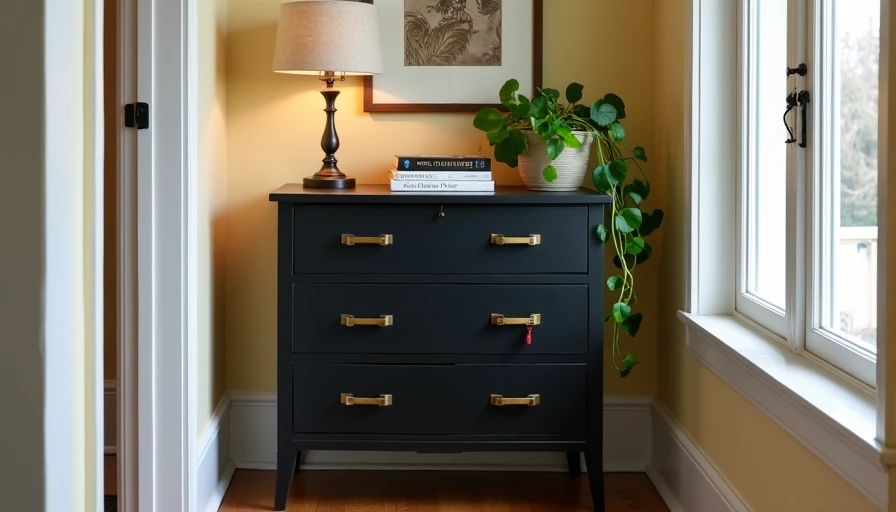
Step 3 — Spray paint. I chose Rust-Oleum Painter's Touch 2X in Satin Canyon Black. Three light coats on the body, one coat inside the drawers (just the fronts), waiting 20 minutes between each. I set up a makeshift spray booth in the Home Depot parking lot — a flattened cardboard box and a prayer. The result was smooth, even, and shockingly professional-looking for a DIY furniture makeover done on concrete.
Step 4 — Hardware swap. The original pulls were unsalvageable. I ordered a two-pack of brushed brass bar pulls from Amazon for $9. The screw holes didn't line up perfectly, so I filled the old holes with wood filler, let it dry, and drilled new ones with a $12 cordless screwdriver I borrowed. New hardware is the fastest way to make a cheap flip look intentional.
Step 5 — Seal and cure. I applied two thin coats of water-based polycrylic in matte finish to protect the paint from scratches. This is a step I used to skip. Don't skip it. A furniture flip for apartment living takes abuse — keys, phones, coffee mugs — and paint alone won't hold up.
The Math
Nightstand: $2
Primer: already owned (but costs $12 if you need it)
Spray paint: $7
Hardware: $9
Polycrylic: already owned ($10 if new)
Total out-of-pocket: $18 (counting only what I actually spent that day: $2 + $7 + $9)
Retail for a similar-looking solid wood nightstand with brass hardware? I found one at West Elm for $349. The Math spreadsheet got a very smug entry that day.
What Went Wrong (Because Something Always Does)
I got impatient and applied the second coat of spray paint before the first was fully dry. The result: a slight ripple on the top edge that you can see if you look closely. I call it "character." Also, I forgot to label the drawer positions, so now the top drawer only fits in the top slot and the middle drawer sticks if swapped. These are the thrifted decor on a budget truths nobody posts on Pinterest — but they're the exact things that make the piece mine.
Why This Matters for Renters
I've moved this nightstand to three different apartments. It's worked as a bedside table in my Dogtown studio, a plant stand in Tower Grove, and now a landing strip for keys and mail in my current rental hallway. It weighs less than 25 pounds and fits in the back seat of my Corolla. Every time I move, it comes with me — and every time, someone asks where I bought it. When I say "I made it from a $2 estate sale find," they don't believe me. That's the whole point of a thrifted furniture flip for renters: you don't need to own the walls to own your style.
No letters yet — be the first guest to write.